


Mitigating Enterprise Operational Risk with Unified Intelligence

16
Feb
Feb
Share:


DGSense connects IT operations, applications, and security into a single platform to detect risks early, reduce disruptions, and strengthen service resilience.
The New Reality of Enterprise Risk
Enterprise risk today is no longer confined to financial exposure or regulatory gaps—it is deeply operational. Service disruptions, system slowdowns, security incidents, and unresolved tickets directly affect customer experience, brand reputation, and business continuity. As organizations become more digital, operational risk becomes business risk.
Modern enterprises depend on interconnected ecosystems of applications, infrastructure, third-party integrations, and digital services. A minor disruption in one component can cascade across the environment, impacting service delivery, customer transactions, and internal operations. At the same time, leadership expectations have evolved. CXOs and boards demand real-time visibility, faster decision-making, and proactive risk mitigation—not delayed reports after incidents occur.
Yet, many organizations still operate with fragmented visibility. IT service management tools track incidents. Application monitoring platforms capture performance metrics. Security systems generate alerts and logs. These tools function effectively within their own domains but rarely operate as a unified intelligence framework. As a result, organizations collect enormous amounts of data but struggle to convert it into meaningful insights.
This fragmentation leads to a critical gap. Operational signals exist, but they are not connected. Risks are visible in pieces, not in context. Teams react to symptoms rather than preventing root causes. And leadership lacks a single, trusted view of enterprise health.
Mitigating operational risk in such an environment requires more than incremental improvements. It requires a new approach—one that integrates operational intelligence across the enterprise.
Understanding the Sources of Operational Risk

Operational risk in modern enterprises rarely comes from a single source—it emerges across applications, infrastructure, processes, and security layers at the same time. Service incidents may originate from performance degradation, SLA breaches may stem from process or infrastructure gaps, and security threats often appear as operational anomalies rather than explicit alerts. Without a unified view, these interconnections remain hidden, making it difficult for organizations to respond proactively.
At the same time, organizations are overwhelmed by the sheer volume of operational data being generated daily—tickets, logs, metrics, traces, and alerts. This data is scattered across teams and tools, creating fragmented perspectives instead of a consolidated understanding of enterprise health. Operations, application, security, and governance teams all analyze their own data streams, but the absence of an integrated framework prevents a holistic view of risk.
Compounding this challenge is the reactive nature of most operational environments. Issues are often addressed only after escalation, root causes are identified post-incident, and preventive insights are limited. The growing disconnect between operational and security domains further increases exposure, as early warning signals embedded in performance patterns or user behavior are frequently missed.
Key challenges contributing to operational risk:
- Risks originate simultaneously across services, applications, infrastructure, and security layers
- Operational data is fragmented across systems, tools, and teams
- High volumes of tickets, logs, metrics, and alerts create analysis complexity
- Reactive operations delay issue detection and root cause resolution
- Limited correlation between service performance and security signals
- Absence of a unified operational intelligence framework
This reality underscores a critical point: operational risk cannot be mitigated in silos. It requires integrated intelligence that connects operational, application, and security insights into a single, cohesive view.
Unified Intelligence as the Foundation for Risk Mitigation

DGSense is built on the principle that operational risk can only be mitigated when data, insights, and actions are connected across the enterprise. It serves as a unified intelligence platform that integrates IT operations, application observability, and security monitoring into a single ecosystem.
Instead of treating operational data as separate streams, DGSense creates a centralized intelligence layer where information is continuously ingested, validated, and analyzed. ITSM data, application telemetry, and security signals are brought together to create a comprehensive operational picture.
This unified approach transforms how organizations understand risk. Rather than identifying issues after they occur, teams gain visibility into patterns, anomalies, and trends as they emerge. Early signals can be detected, contextualized, and addressed before they escalate into incidents.
Transforming IT Operations into a Predictive Function
Traditional IT operations focus on responding to tickets, managing incidents, and maintaining service levels. While necessary, this approach limits the ability to anticipate issues. DGSense shifts IT operations from reactive management to predictive intelligence.
By integrating directly with ITSM platforms and other Cyber Security platforms, DGSense continuously ingests incident and service request data. This data is cleansed, normalized, and analysed to identify patterns such as recurring issues, SLA trends, backlog accumulation, and service degradation.
Advanced dashboards provide real-time visibility into operational performance. Teams can drill down into specific services, departments, and categories to identify root causes and emerging risks.
Machine learning capabilities enhance this intelligence by automating ticket classification and identifying anomalies. Historical patterns are used to predict potential disruptions and improve routing accuracy. Over time, the system becomes more intelligent, continuously learning from operational behavior.
Intelligent alerting ensures that critical signals are not missed. Teams receive notifications aligned with business priorities—whether related to SLA breaches, ticket spikes, or operational anomalies. This allows organizations to intervene early, preventing escalation and minimizing impact.
The result is a more resilient IT function—one that anticipates problems, prioritizes effectively, and responds with speed and precision.
Connecting Application Performance to Service Outcomes
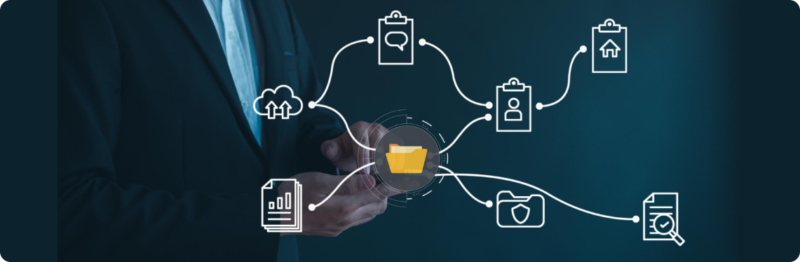
Application ecosystems are central to enterprise operations. Core systems, middleware platforms, and digital interfaces power customer journeys and internal processes. However, performance issues within these applications often remain isolated from service management insights.
DGSense bridges this gap by integrating application logs, traces, and performance metrics into its intelligence framework. This enables organizations to connect operational outcomes with underlying application behavior.
When incidents occur, teams can trace them back to performance bottlenecks, infrastructure dependencies, or transaction failures. Service maps provide visibility into application interactions, helping teams understand how disruptions propagate across systems.
Custom application journey views highlight how transactions flow across platforms, offering insights into customer experience and operational efficiency. This visibility enables proactive optimization, reducing downtime and improving service reliability. By aligning application performance with service intelligence, organizations gain a deeper understanding of operational risk and its root causes.
Embedding Security into Operational Visibility

Security is no longer a standalone function. Cyber threats, insider risks, and vulnerabilities often manifest within operational data. DGSense incorporates security telemetry into the same intelligence layer used for operations and application monitoring.
Logs from endpoints, networks, and infrastructure are ingested and correlated with service and performance data. This enables advanced detection capabilities that identify patterns across multiple domains. Threat-hunting becomes more contextual, as security teams can understand how anomalies impact services, users, and applications. Operational insights support faster investigation, response, and remediation.
Centralized log repositories support compliance requirements and provide searchable audit trails. This ensures that organizations remain audit-ready while strengthening their risk posture.
Integrating security into operational intelligence enhances enterprise resilience and enables organizations to respond to both cyber and operational risks with greater agility.
Enabling Leadership with Clarity and Control
One of the most significant challenges organizations faces is translating operational complexity into actionable leadership insights. DGSense addresses this by providing a unified view of enterprise health.
Leadership dashboards consolidate operational metrics, service performance indicators, and security signals into a single narrative. CXOs gain visibility into high-risk areas, service trends, and operational performance in real time.
This clarity enables better decision-making. Investments can be prioritized based on risk exposure. Operational improvements can be targeted where they matter most. Governance teams can track performance against objectives and compliance requirements.
Building a Resilient Enterprise
The ultimate goal of unified intelligence is resilience—the ability to anticipate, adapt, and respond to change without disruption.
DGSense supports this vision by transforming how organizations manage operations. It connects signals across domains, identifies patterns, and enables proactive action. Teams collaborate more effectively. Risks are addressed earlier. Services improve continuously.
As digital ecosystems grow, operational complexity will increase. More applications, more integrations, and more data will demand smarter systems and more connected intelligence.
Organizations that invest in unified intelligence today position themselves for long-term resilience. They move beyond firefighting and build environments that are stable, responsive, and adaptive.
DGSense delivers that intelligence, helping enterprises move confidently toward a future defined by stability, agility, and control.
Share: